
A First-Timer’s Guide to Nepalese Food in Carvoeiro'>A First-Timer’s Guide to Nepalese Food in Carvoeiro
NEPAL · FOOD & FLAVOUR
A plate of momo is an easy place to start. A lentil dish, a grilled starter or a slowly cooked lamb curry can show you a different side of Nepalese cooking.
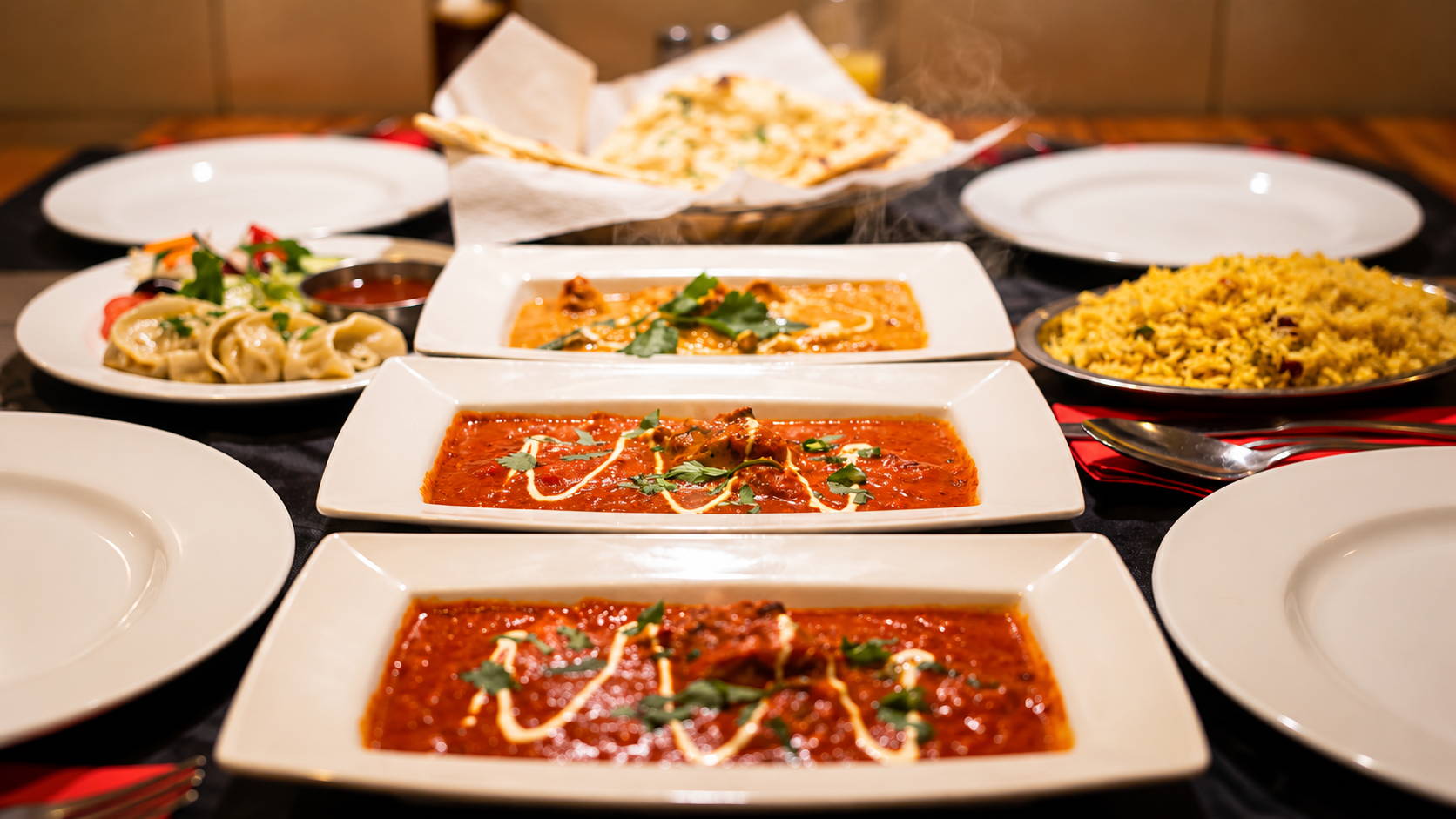
If you are trying Nepalese food in Carvoeiro for the first time, you do not need to recognise every name on the menu. Start with the kind of meal you enjoy, then ask about the ingredients and the heat. This guide introduces a few food traditions from Nepal and connects them with dishes on our own menu.
Nepalese food has many regional traditions
Nepal’s food varies between regions and communities. Indian and Tibetan cooking have influenced it, while Newari and Thakali traditions have their own dishes and meal patterns. A restaurant menu can introduce some of these flavours, but it cannot represent everything people eat across the country.
The Nepal Tourism Board’s guide to culture and food describes a familiar everyday meal: dal, or lentils; bhat, or rice; tarkari, or vegetables; and achar, a pickle or relish. The accompaniments matter. They let you move between softer flavours and something sharper or hotter as you eat.
Momo: Nepal’s much-loved dumplings
Momo are filled dumplings, commonly steamed, although fried and soup-based versions also exist. The filling, folding and sauce vary. Nepal Tourism Board’s Nepalese heritage cuisine recipe book discusses their Tibetan connections and the role of Newari traders in bringing them to Nepal.
At Gurkha Kitchen, our starter mo:mo uses gently spiced minced lamb in steamed pastry and comes with tamarind sauce. The main-course version on our chef’s recommendations menu comes with sesame sauce. If you are choosing between them, think about whether you want a small introduction before a curry or dumplings as the focus of your meal.
People sometimes expect all Nepalese food to be very hot. Momo is a useful reminder that spice can mean seasoning and aroma, too. Ask us about the sauce and your preferred heat before ordering.
Try a Nepalese starter beyond momo
Chhwela wochha combines chicken or lamb with Nepalese spices and a lentil pancake. It offers a different texture from a dumpling: seasoned meat alongside the pancake underneath. Our menu describes it as a traditional Nepalese starter.
Lamb sekuwa is another option. We cook spicy strips of lamb in the clay oven with Nepalese spices, green chillies and onion, then garnish them with coriander and ginger. Choose it if you enjoy grilled meat and want a starter with more heat.
For a vegetarian starter, piro paneer combines cottage cheese, onions and peppers in a spicy Nepalese sweet-and-sour sauce. Paneer is dairy, so this is a vegetarian choice rather than a vegan one.
Choose a main by the flavours you enjoy
Our chef’s recommendations include Sherpa lamb curry, made with slowly cooked lamb, potato, onion and Gurkha spices. Daa:kula curry takes another route, with lamb stock, tomatoes, coriander and ginger.
If chicken is your preference, Himalayan cham cham combines tandoori chicken with onions, peppers, garlic and ginger in a medium-spiced creamy sauce. These descriptions tell you more than the dish names alone. One choice centres on lamb and potatoes; another on tandoori chicken and a creamy sauce.
There is no need to order several unfamiliar dishes at once. Pick a starter that interests you and a main whose ingredients sound appealing. On a later visit, try something different.
Build a meal that suits your table
If you are sharing, mix textures as well as dishes: a steamed starter, something from the clay oven and a curry with rice or bread. Discuss portions with us so you can order comfortably for your group.
Tell the team about any allergies before choosing. Sauces and accompaniments can contain ingredients that are not obvious from the dish name, including sesame or dairy. We can explain the current preparation and help you decide what to order.
Our full menu has the current dish descriptions. If you would like help comparing sauces, read our guide to choosing an Indian curry. For the story behind the name above our door, see our short history of the Gurkhas.

 English
  Italian
  Spanish
  French
  Dutch
Dutch  Portuguese
  German